Dice Lords
- 4.1
- Rating
- 100.00K
- Installs
- Free
- Price

 Analysis by App-foxy
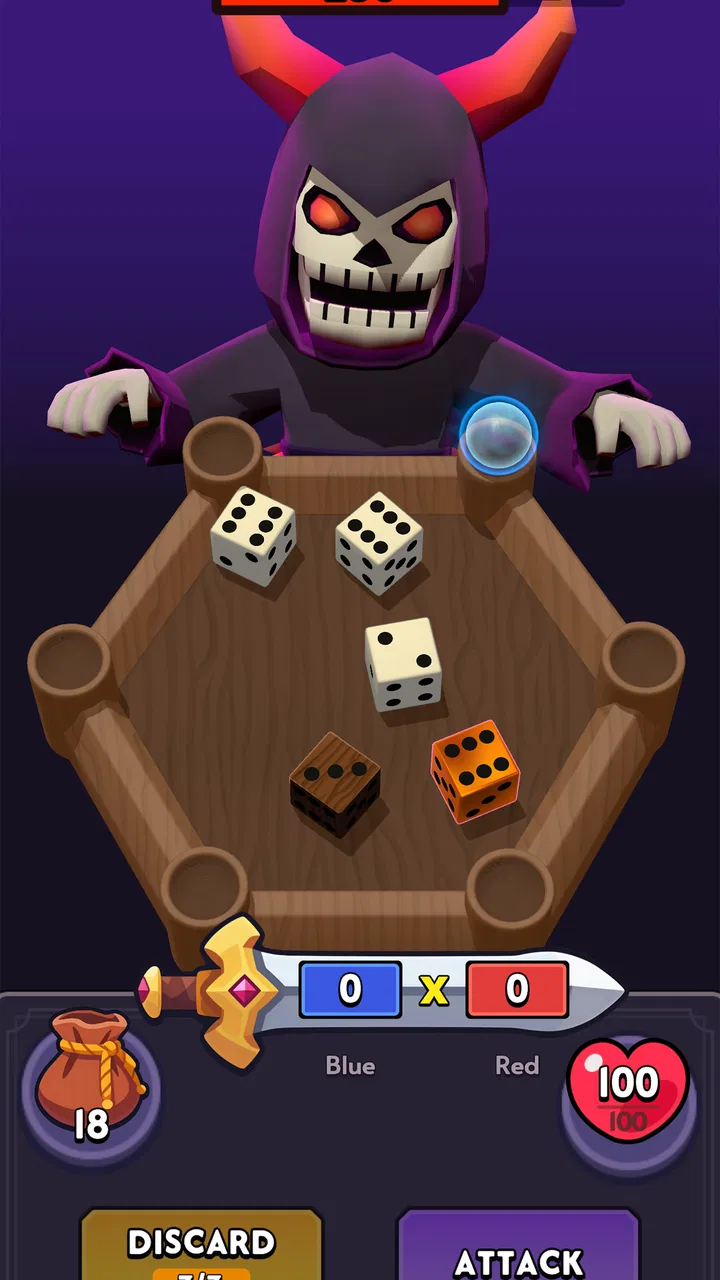
Dice Lords caught my attention because it turns a familiar board-game object into the main tool for exploring dangerous dungeons and collecting loot. I found the first sessions easy to understand: roll, react to the result, and decide how much risk is worth taking before moving forward. That simple loop gives the game an inviting first-week appeal, especially when I want something I can play in short bursts rather than commit to a long campaign.
It is a free board game from VOODOO, aimed at Teen players, and it has already built a modest audience with a 4.1 average from around 2.2 thousand ratings. The store describes it in just a few words as Dice Lords, but that label does not really explain its appeal. The interesting part is not merely throwing dice; it is making small decisions under uncertainty while trying to turn an imperfect roll into progress.
Why the first sessions work so well
My first impression was that the game understands the value of immediate feedback. A roll produces a result, the dungeon responds, and I quickly have a reason to make another attempt. That rhythm is useful on a bus ride, during a coffee break, or at the end of the day when I want interaction without a large mental setup.
You May Also Like

 Blood Strike: 2.5 Anniversary
Blood Strike’s Loadouts Turn Every Drop Into a Tactical Gamble
A close look at Blood Strike’s custom loadouts: how fast access to signature weapons reshapes its battle royale rhythm, rewards preparation, and narrows the gap between fights.

 Pandora - Music & Podcasts
Pandora’s Music Is Easy to Start, but Harder to Recover
Pandora’s strength is its low-effort path from a seed to a station. Its weak spot is how much confidence it asks you to place in connection, setup, and quiet recovery.

 8 Ball Pool
 Is Built on Rivalries, Rematches, and Routine
A close look at the rivalries, rematches, shared routines, and unanswered safety questions that turn a quick pool match into a persistent mobile community.

 Samsung Music
’s Quiet Strength Is Playing What You Already Own
Its reach comes less from spectacle than from dependable access to a personal library. That simplicity is both the app’s strongest retention engine and its ceiling.

 AccuWeather: Weather Radar
AccuWeather Review: A Quick, Clear Forecast for Everyday Decisions
For everyday plans, the best forecast is the one you can understand quickly. AccuWeather makes rain timing, radar, and local conditions easy to act on, with a few trade-offs.

 Hill Climb Racing
Why Hill Climb Racing Still Turns Crashes Into One More Run
A tiny car, a bumpy hill and one more upgrade: Hill Climb Racing keeps resurfacing because its simple chaos makes every near-miss feel personal.
More From Our News Desk
View All News


The dungeon-and-loot theme also gives each decision more personality than a plain tabletop simulator would have. Even when the underlying action is straightforward, danger makes me pause before treating every roll as automatically good. A promising result can still invite overconfidence, while a poor result can become a reason to adjust rather than quit.
The smartest way to approach the opening sessions is to treat them as practice in risk control, not as a race to push forward. I found that I enjoyed the game more when I paid attention to how much uncertainty I was willing to accept. That mindset makes the dice feel like a decision-making tool instead of a button I press repeatedly.
This is also where the game’s category matters. Dice Lords is a board game, so its appeal comes from compact choices and repeatable turns rather than from the elaborate exploration systems I would expect in a large role-playing game. If I want a rich story, extensive character conversations, or a huge world to wander through, this is not the right substitute. If I want a quick tactical diversion with a clear theme, it makes more sense.
A useful routine for short play sessions
For everyday use, I would play it in deliberate blocks rather than leave it open indefinitely. A few focused attempts are enough to decide whether I am enjoying the current run. When I played with that limit in mind, the game felt like a convenient break instead of another endless feed competing for attention.
One practical tip is to avoid judging the game after a single unlucky sequence. Dice-based systems naturally create swings, and an early setback can make the design seem harsher than it feels over several attempts. I prefer to look at whether my choices improve the outcome around the roll. If I am only waiting for a lucky result, the experience becomes less satisfying.
Another useful habit is to notice when I am continuing because the next reward feels close rather than because I am still making interesting decisions. That distinction matters. The game is at its best when I am weighing danger against possible loot; it is less compelling when the next action feels like routine tapping.
What makes the loop more than random luck
The central trade-off is easy to miss if I focus only on the dice. Randomness creates the situation, but my response determines whether the turn feels meaningful. I may have to decide whether a modest gain is enough, whether a dangerous option is worth taking, or whether continuing would turn a good position into a bad one.
That creates a small but genuine layer of planning. I do not need a notebook or a complicated build guide to participate, which is a strength for casual players. At the same time, someone who dislikes uncertainty may find the lack of complete control frustrating. Dice Lords cannot remove that tension without losing the character of its own design.
The game also works because its theme gives failure a clear context. Losing progress in an abstract number game can feel arbitrary, while encountering danger in a dungeon at least makes the setback feel connected to the fantasy. I still notice the randomness, but I am more willing to accept it when the surrounding loop keeps moving.
Does it keep earning attention after the novelty?
The harder question is not whether Dice Lords can entertain me during the first week. It can. The harder question is whether the same roll-and-risk structure continues to offer enough variety once the initial curiosity fades. My answer is qualified: it can remain useful as a compact repeat-play game, but it is unlikely to become a permanent daily habit for everyone.
The strongest long-term use case is as a lightweight companion game. I can return when I have a few minutes, make some decisions, and leave without needing to remember a complicated plot. That makes it more sustainable than games that demand long uninterrupted sessions. Its modest footprint in my routine is also part of its value; I do not need to reorganize my evening around it.
However, repeat value depends heavily on how much I enjoy the core uncertainty. If I need constant new rules, deep strategic layers, or a strong sense of personal progression, the basic loop may eventually feel narrow. Dice Lords is not trying to replace a full tabletop campaign or a large strategy title. It earns repeat visits by making small risks enjoyable, not by offering limitless complexity.
Who is most likely to keep playing
I would recommend it to someone who likes board games but wants a solo-friendly mobile format, enjoys making decisions with incomplete information, and prefers sessions that can be stopped quickly. It is especially suitable for players who like the emotional swing of a dice roll but still want some control over how they respond.
It may also suit a player who normally avoids heavy strategy games. The dungeon setting adds enough purpose to make the rolls feel directed, while the board-game structure keeps the interaction approachable. I would not require prior experience with tabletop games to understand the attraction.
On the other hand, I would steer away from it for anyone who finds random outcomes irritating even when the surrounding decision is sensible. Players looking for competitive social play, a substantial narrative, or a highly customizable role-playing system should choose a different kind of game. Dice Lords is most comfortable in the middle ground between a quick casual diversion and a small tactical challenge.
Where the monthly value comes from
After the opening excitement, I find the game’s recurring value in its convenience rather than in a dramatic transformation of the experience. It is easy to revisit, easy to understand after a break, and suitable for filling small gaps in the day. That matters more than it sounds. Many mobile games lose their usefulness because returning requires remembering too much or recovering from a long absence.
Here, the maintenance of my own habit is simple: play when I want a short decision loop, stop when the choices begin to feel automatic, and return later without treating every session as a commitment. This approach protects the game from becoming background noise. I would rather play it occasionally with attention than turn it into a repetitive obligation.
The game has passed one hundred thousand installs, which suggests that the compact dungeon concept has found an audience. I would not interpret that as proof that it suits every board-game fan, but it does make the experience feel less like an isolated experiment. The current version is 1.6.1, so players joining now are entering an actively presented mobile product rather than an old forgotten release.
The real maintenance burden
Dice Lords is not difficult to maintain in the usual sense. The larger issue is attention. A game built around repeated rolls can become something I open automatically, even when I am no longer enjoying the decisions. The best maintenance strategy is therefore personal: keep sessions purposeful and notice when the loop has stopped producing anticipation.
There is also a financial consideration. The game is free to start, but in-app purchases range from $0.99 to $99.99 per item. That broad range means I would approach optional spending carefully, particularly if I am using the game as a casual time filler. Before buying anything, I would ask whether it improves a genuine part of my play or merely shortens a moment of waiting or frustration.
For me, the free entry point is enough to evaluate the basic appeal. I would not spend simply because a difficult run makes me impatient. A useful rule is to play several separate sessions first and decide whether the underlying choices remain enjoyable without treating purchases as a solution. If the game only feels satisfying after spending, that is a sign it may not be the right long-term fit.
The Teen content rating is another reason I would consider the intended audience before recommending it to younger players. Parents should check the game’s suitability for their household rather than assume that a board-game label automatically means it is appropriate for every age.
What can cause fatigue over time
The main source of fatigue is repetition. Dice are exciting when the result changes a meaningful decision, but less exciting when each turn follows the same mental script. I notice the difference when I stop asking myself what to do and start tapping simply because another roll is available.
Risk can also become tiring if the consequences feel too severe compared with the amount of control I have. Randomness is part of the appeal, but the balance has to leave me feeling that my choices mattered. When an unlucky sequence dominates several attempts, I need a break before deciding whether the problem is the game or my mood.
Another limitation is that the dungeon theme may set expectations higher than the compact format can satisfy. I enjoy the atmosphere as a frame for the dice, but I would not approach it expecting the depth of a traditional dungeon crawler. The game’s identity is closer to a focused board-game loop than to an expansive adventure.
How it compares with familiar alternatives
Compared with a physical dice game, Dice Lords is more convenient and less social. I can pick it up without setting out components, tracking pieces, or finding another player, but I also lose the conversation and shared tension that make tabletop sessions memorable. For solo downtime, the mobile format wins; for a group evening, a real board game is usually richer.
Compared with a standard puzzle game, it offers more uncertainty and a stronger sense of risk. A puzzle usually rewards finding the correct solution, while Dice Lords asks me to work with an imperfect situation. That makes it more replayable for some moods, but less satisfying for players who want complete control and a clean answer.
Compared with a large mobile role-playing game, it is far lighter in commitment. I do not choose it for story, world-building, or lengthy progression. I choose it when I want a themed decision loop that fits between other activities. That distinction is important because downloading it with the expectations of a major adventure game would lead to disappointment.
Small decisions that improve the experience
I get better sessions when I separate progress from excitement. A dramatic roll is memorable, but a cautious choice can be more valuable if it prevents a needless setback. I try to ask whether I am protecting a useful position or chasing a reward because it looks attractive in the moment.
I also recommend using the game as a reset between demanding tasks rather than as a way to avoid them indefinitely. A short session can clear my head, while an unplanned string of attempts can leave me more distracted. The difference is not a hidden feature; it is a practical way to keep a repeatable game from taking over the time it was meant to fill.
Finally, I would judge the game over several kinds of days. When I am tired, its simple structure is welcome. When I want deep strategy, it feels too compact. When I want a quick risk-reward decision, it works particularly well. That changing context explains why I can recommend it without claiming it will become everyone’s main game.
My long-term verdict
Dice Lords earns a place as an occasional, low-commitment board game rather than an automatic forever game. Its first-week appeal is clear: the dungeon setting gives purpose to dice rolls, the decisions arrive quickly, and the format fits short sessions. I also appreciate that I can return after a break without rebuilding a complicated mental model.
Its lasting value depends on accepting its boundaries. The game is not a replacement for a deep strategy title, a social tabletop night, or a story-led role-playing adventure. Its strengths are narrower and more practical: quick access, approachable risk, and a loop that can provide a satisfying pause when I do not want a major time investment.
I would recommend trying the free version to players who enjoy uncertainty and want a casual dungeon-themed board game on Android or iOS. I would be more cautious with anyone who dislikes repeated rolls, expects constant novelty, or is easily tempted by optional purchases. For my own use, it stays installed when I want a small tactical break, but I would not force it into a daily routine once the decisions begin to feel automatic.
That is ultimately why I think it works. Dice Lords does not need to dominate my attention to be worthwhile. It succeeds when I open it for a few focused minutes, weigh a risky opportunity, and leave feeling that the choice—not just the roll—shaped the outcome.
FAQs for Dice Lords
01What is Dice Lords and how does it work?
Dice Lords is a strategic mobile game available for both Android and iOS platforms. Players roll dice to move through a board, engaging in battles and completing quests. The game combines elements of strategy and luck, offering various characters and abilities that players can upgrade as they progress.
02Is Dice Lords free to play, or are there in-app purchases?
Dice Lords is free to download and play. However, it offers in-app purchases for players who wish to enhance their experience. These purchases can include additional dice, character upgrades, and special abilities. While not necessary to enjoy the game, they can provide a competitive edge.
03What are the system requirements for Dice Lords?
To ensure smooth gameplay, Dice Lords requires Android version 5.0 or later and iOS version 10.0 or later. The game also recommends having at least 2GB of RAM and a stable internet connection for the best experience, especially during multiplayer sessions.
04Can I play Dice Lords offline?
Dice Lords primarily focuses on online multiplayer battles and quests, requiring an internet connection. However, the game does offer some offline modes where players can practice against AI opponents, allowing for gameplay without a connection, albeit with limited features.
05How does the multiplayer feature in Dice Lords work?
The multiplayer feature in Dice Lords allows players to compete against friends or random opponents globally. Players can join or create matches, using their strategic skills to outsmart opponents. The matchmaking system ensures balanced gameplay by pairing players of similar skill levels, making for fair and exciting matches.
Pros
- Engaging gameplay with strategic depth.
- Vibrant graphics and animations.
- Regular updates with new content.
- Smooth performance on most devices.
- Accessible for both new and experienced players.
Cons
- Requires constant internet connection.
- In-app purchases can be pricey.
- Occasional matchmaking delays.
- Limited offline features.
- Some ads can be intrusive.

Dice Lords
Gallery